Padel vs Tennis: What Is the Difference?

Padel is often described as a mix of tennis and squash, and if you have played tennis, you will feel at home within minutes. If you have never picked up a racket at all, padel is arguably the better place to start. The two sports share a scoring system and a net, but almost everything else plays differently.
Padel was invented in 1969 in Acapulco, Mexico, when Enrique Corcuera adapted a squash-style court at his home. It spread to Spain and Argentina, where it became one of the most played sports in the country, and it is now booming in Britain. The LTA reports that padel participation in Britain doubled in 2025 to around 860,000 players, with over 1,500 courts now open. Here is how it compares with tennis.
Padel vs tennis: side by side
| Padel | Tennis | |
|---|---|---|
| Court size | 20m x 10m | 23.77m x 10.97m (doubles) |
| Walls | Glass and mesh, in play | None |
| Usual format | Doubles | Singles or doubles |
| Racket | Solid, stringless, max 45.5cm | Strung, up to 73.7cm |
| Ball | Slightly lower pressure | Standard pressure |
| Serve | Underarm, at or below the waist | Usually overhead |
| Net height (centre) | 88cm | 91.4cm |
| Scoring | 15, 30, 40, game (often golden point) | 15, 30, 40, game |
| Time to first rally | Usually minutes | Often weeks |
The court
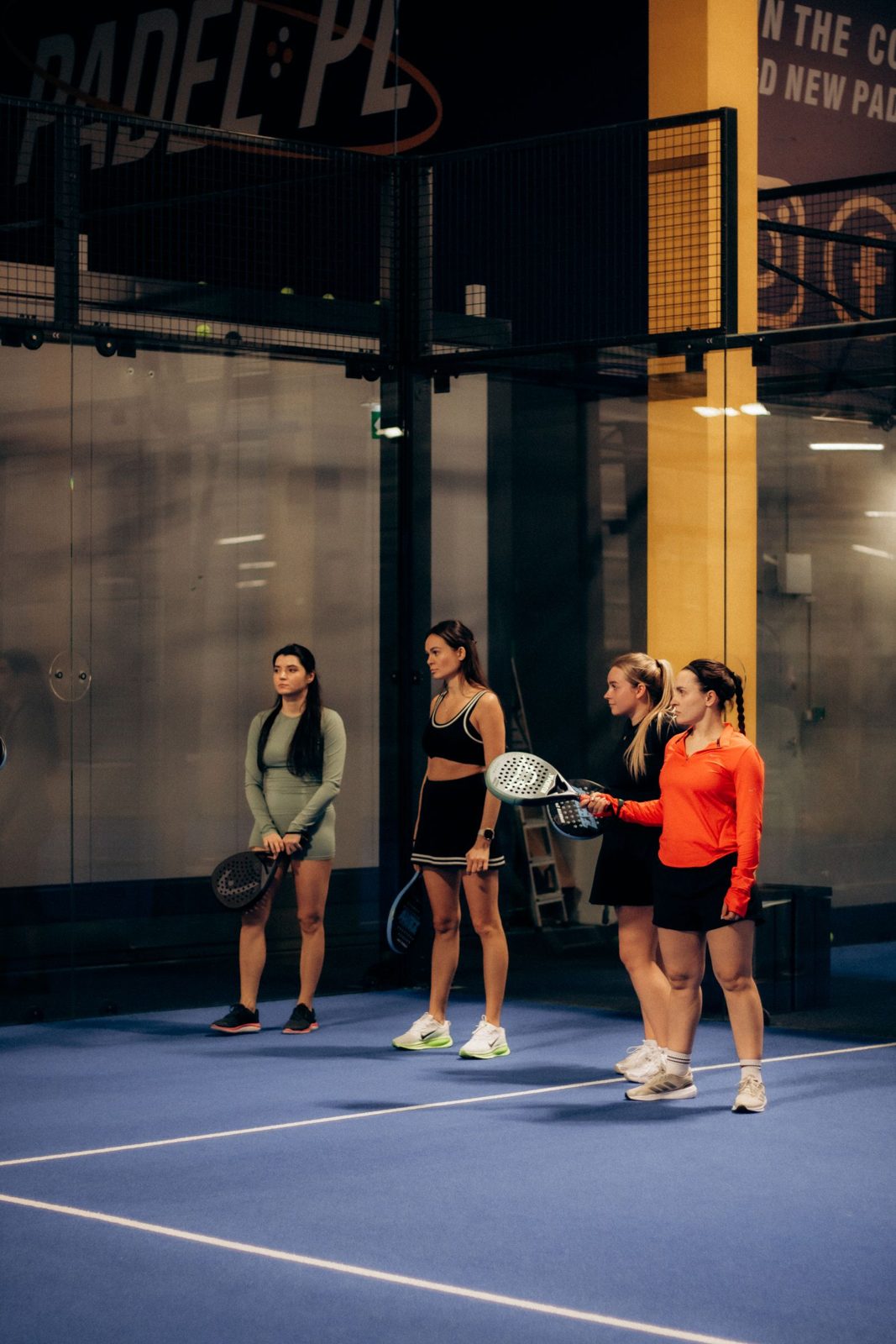
A padel court is about a third of the area of a doubles tennis court and fully enclosed. That has two big effects. First, far less time is spent chasing stray balls. Second, the rallies are much closer together, so you are involved in almost every point, even as a beginner.
The racket and ball
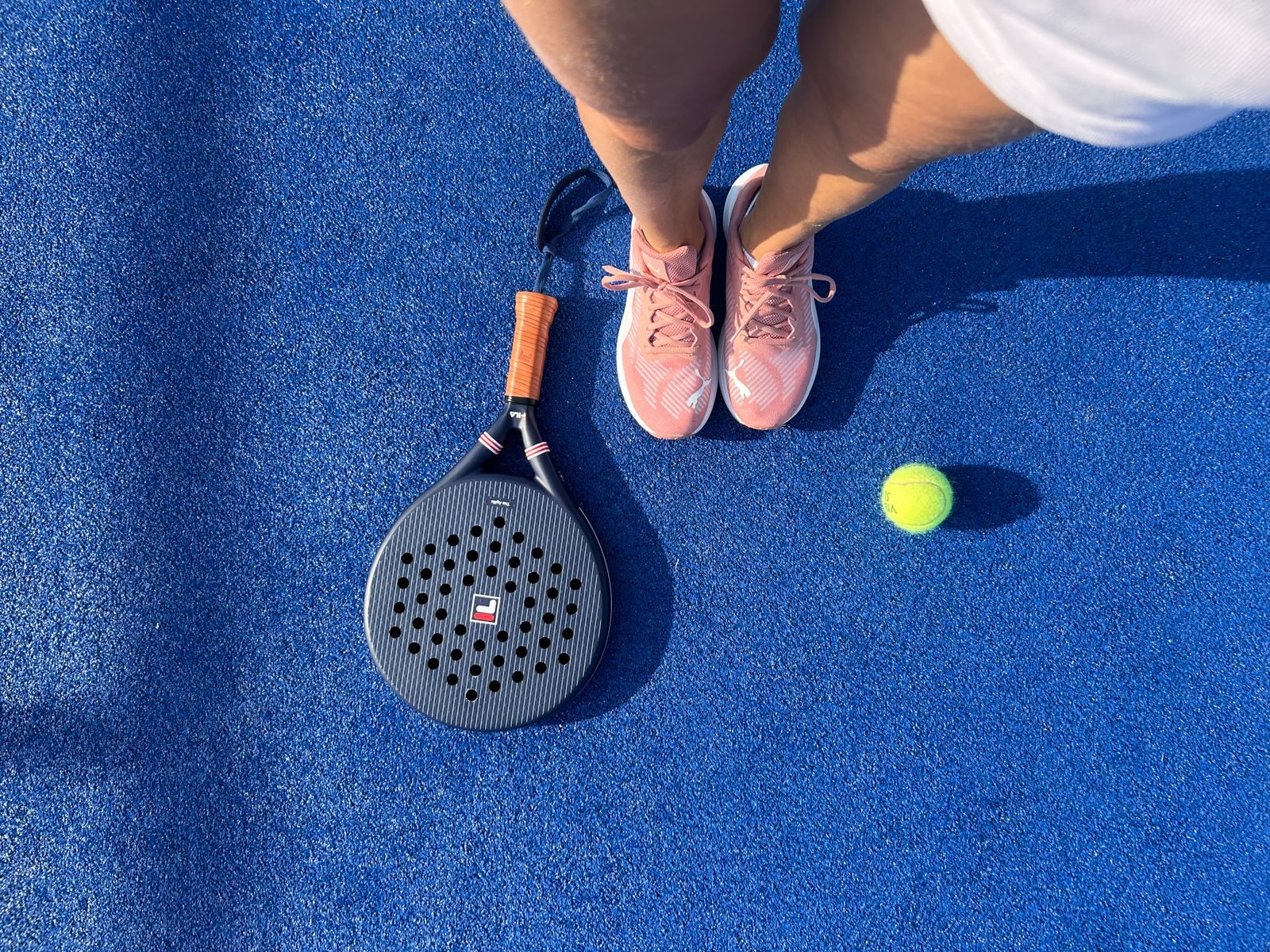
Padel rackets are solid, with a foam core and a perforated face instead of strings. They are much shorter than tennis rackets, with a maximum length of 45.5cm under the official rules, which makes them easy to control, especially close to the net. The sweet spot is forgiving, so off-centre hits still tend to go over.
The ball looks like a tennis ball but has slightly lower internal pressure, so it travels a little slower and bounces a little lower. Put together, that means beginners can keep the ball in play far sooner than they could in tennis.
The serve
In tennis, the overhead serve is the hardest shot to learn and can decide whole matches. In padel, the serve is underarm: bounce the ball behind the service line and hit it at or below waist height, diagonally into the service box. It is simple enough to learn in your first session, and it means rallies start straight away instead of with a string of double faults.
The walls change everything
The biggest difference is that in padel the walls are part of the game. After the ball bounces on your side, it can come off the glass and you can still return it. You can even hit the ball into your own wall to send it back over the net.
That changes the whole style of play. In tennis, a well placed deep shot often wins the point outright. In padel, that same shot comes back off the glass, so points are built patiently. Power matters less; placement, lobs and positioning matter more. It is a genuinely tactical game, but one that beginners can enjoy from day one.
Tactics: the net is king
Both sports reward getting to the net, but in padel it is everything. The team at the net is usually attacking, and the team at the back is usually defending. The most important shot in padel is the lob, used to push opponents off the net so you can take it yourself. Overheads are often played as controlled, sliced shots called the bandeja and the vibora rather than all-out smashes, because a smash that is not hit hard enough simply comes back off the glass.
Fitness and the social side
Both are great exercise. Padel involves lots of short sprints, lunges and changes of direction, but because the court is smaller and rallies last longer, it tends to feel less punishing than tennis for newcomers. And because it is almost always doubles, it is naturally social: four people, one court, plenty of chat between points and, usually, a drink together afterwards.
Which is easier to learn?
Padel, for most people. The underarm serve, forgiving racket, slower ball, smaller court and the second chance the walls give you all lower the barrier to entry. Tennis players adapt quickly too. Your hand-eye coordination and volleys transfer straight across; the main adjustment is learning to be patient with the back glass and shortening your swing.
Should you switch?
You do not have to choose. Plenty of tennis players now play both, using padel as a sociable, lower impact option in the week or when they cannot find a singles partner. If you have never played either, start with padel. You will be having proper rallies in your first hour.
Be first on court at DOME PADEL
DOME PADEL is opening soon in Stechford, east Birmingham, with 8 indoor courts under one roof, coaching for every level, free parking and dedicated disabled padel courts. Register your interest at domepadelltd.com and you will hear about the opening date before anyone else.
Be first on court
DOME PADEL is opening soon in Stechford, Birmingham. Register your interest to be first to hear our opening date.
Register Interest